<img height="1" width="1" style="display:none" src="https://www.facebook.com/tr?id=115389302216927&amp;ev=PageView&amp;noscript=1">
LET'S TALK
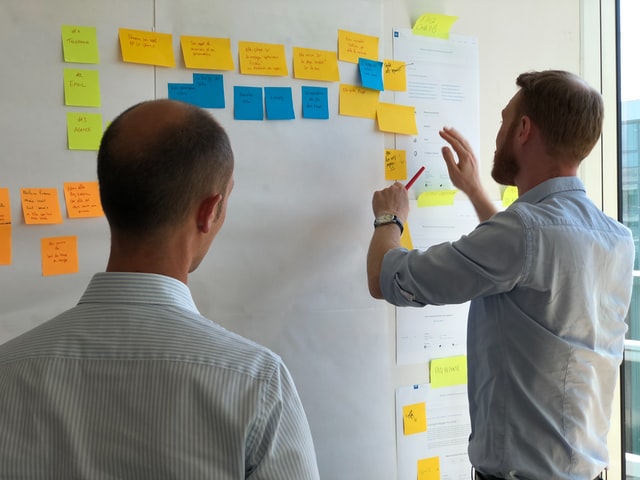
Two people working with post-it notes - small

Day 2: from Analysis to Design

Building the foundations for learning that actually transfers


What this day focuses on

This day brings together two tightly connected parts of the learning design process that are often treated separately — planning and analysis, and instructional design decisions.

The emphasis is on moving from insight to action: understanding learners, content, and context in ways that directly inform how learning is designed, practised, and supported back in the workplace.

Rather than adding models and frameworks for their own sake, the focus is on making better decisions earlier. Decisions that reduce rework later and make learning easier to apply.


Why this day?

Many L&D practitioners already know the “right steps” at the start of a learning project: understand the audience, define objectives, analyse content.

The challenge is that following those steps in a conventional way often leads to superficial answers — accepted assumptions about learners, vague objectives, and content-driven solutions that struggle to translate into real behaviour change.

This day exists to explore a more performance-aware version of that early-stage work — one that digs beneath surface answers and creates a stronger foundation for everything that follows.

Question Mark
 

What makes this day different?

Instead of treating planning, analysis, and design as discrete phases, this day treats them as a connected line of reasoning. Participants explore how:

  • deeper learner analysis (including likely resistance to change) shapes design choices

  • distinguishing between knowing and doing content clarifies objectives, and

  • different types of transfer demand different kinds of practice and support.

These ideas often unlock an important realisation: difficulties with learning outcomes are rarely caused by poor delivery alone — they are usually baked in much earlier.

Standing Out
 

What you'll work through

Across the day, you’ll work with practical frameworks that help you:

  • analyse learners beyond surface demographics

  • identify behavioural objectives that actually matter

  • recognise different transfer demands and their implications, and

  • design practice activities that align with real-world performance.

The aim is not to overwhelm you with theory, but to give you a small number of tools that meaningfully improve design decisions.

Work on the Day
 

What this day covers

Across this day, we’ll work through four modules from our Learning Re-Framed in-house programme.

You can see the descriptions of each of the modules listed below in the in-house programme section of the website (opens in a new window):

PA01: Setting the scene
Recognising the human factors that influence effective workplace application of learning.

PA02: Getting up and running
Looking at your learners and identifying the outcomes you want for them, through an impact focused lens.

PA03: Analysing your content
Identifying the underlying purpose of your content and fully aligning this with you outcomes.

IDF01: Successful skills transfer
How different kinds of practice support different types and levels of skills transfer.


 

Who it's for

This day tends to resonate strongly with:

  • people who moved into L&D without formal training.

  • experienced practitioners who sense there might be a better way to approach design.

  • teams who want to improve outcomes without adding unnecessary complexity.

Many people describe this as the point where things “start to click”.

Who Medium
 

How this connects to the wider programme

The From Analysis to Design day provides the conceptual and practical foundation for everything that follows in the programme — including e-learning design, in-person and virtual classroom design, and performance support.

Jigsaw

Want to explore this thinking before the programme?

Learning Re-Framed is a weekly Substack-published newsletter exploring how learning connects to day-to-day work — without hype, blame or simplistic answers. If you’re interested in:

  • refining and re-framing familiar L&D practices,

  • looking more deeply at your learners, objectives and content, and

  • strengthening your instructional design by understanding what really enables skills to transfer

you’re very welcome to subscribe here:


Instructional design
 

Practical details

From Analysis to Design is a full-day session within the Learning Re-Framed public programme. You can attend this day on its own or as part of the full programme. No prior attendance is required.

To see programme dates, pricing, practical details and to make a booking, use the link or button below to go to the Practical Info and Bookings page:


Cogs

Download a Learning Re-Framed Programme Brochure...

If you need more information about our Learning Re-Framed public programme (or the in-house alternative) download one of the comprehensive brochures shown below:


Browse More Days?

Ready to take a look at the modules in other content streams? Use the links below or the main site menu above.


Ready to book or just need help?


Get some help

If you have any questions, or need some help with any aspect of the programme:
 
Click on the button below to use our help form; call us on 0845 122 7102 or email us at: enquiry@pacificblue.co.uk
 
 
Click to ask your question or get help
 

Ready to book?

If you are ready to book you can do this on our Practical Info and Booking page.

This page provides:

  • upcoming programme dates

  • practical information, and

  • the facility to book your place by card or by requesting an invoice.


A practical starting point for instructional design fundamentals


If you’re looking for a simple, structured introduction to core instructional design principles, this guide offers a clear and practical starting point.

The Essential Step-by-Step Guide to Instructional Design focuses on the foundations that underpin effective learning design, including how to:

  • avoid content-heavy, presentation-driven learning
  • build meaningful practice into your designs
  • support learners to apply what they’ve learned back in the workplace


The guide is intentionally practical and works well alongside the broader thinking explored in Learning Re-Framed — particularly if you’re looking to strengthen your design fundamentals before going deeper.

Signpost small